Terrorizing the Tarantula
Tarantulas may be the most iconic spider there is, striking fear in the hearts of arachnophobes everywhere. Oversized or overpopulated hordes of tarantulas star as the antagonists of countless horror movies. Eight-legged freaks, Tarantula, and the movie that still makes me double-check my bedsheets to this day, Arachnophobia, all revolve around these hairy horrors. Even the burglar from the family classic, Home Alone, screams in terror as the family tarantula slowly crawls onto his face.
Tarantulas cover the Earth, found on every continent excluding Antarctica, and include many different species. The largest species, the Goliath Bird Eating Tarantula of South America is the heaviest spider on Earth and known to take down birds and even snakes. Luckily, Texans won’t be bothered by this behemoth, but there are still 14 different species of tarantulas in Texas. Like most spiders, tarantulas have venomous glands in their “fangs” most commonly referred to as their jaws. However, tarantula venom is usually non-lethal to humans, and tarantulas are rarely known to bite humans unless provoked.
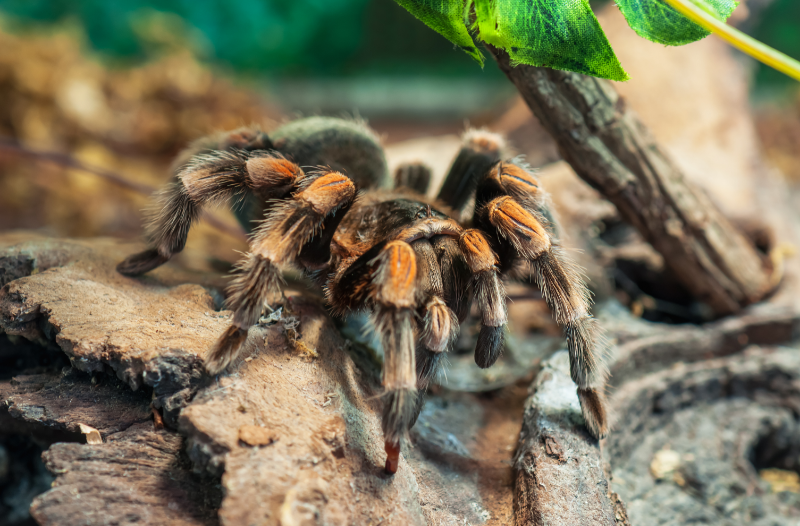
So with roughly 12% of Americans admitting to suffering from arachnophobia and tarantulas cast by Hollywood as the star spider of our nightmares, does anything scare the tarantula?
Meet the tarantula hawk: the insidious insect that terrorizes the tarantula. If you haven’t already guessed, the aptly named tarantula hawk hunts tarantulas. Therefore, if you live in an area where tarantulas wander, tarantula hawks are sure to be lurking nearby. In North America, most tarantula hawks are found in the Southwest, stretching from Texas to Utah. Boasting bright orange wings, bluish-black bodies, and spanning up to 2 inches long, the tarantula hawk makes quite the striking specimen. Coming across a tarantula hawk for the first time, you might think you’re looking at a giant dirt dauber, but those bright colors are a warning to keep your distance. The tarantula hawk has the second most painful sting of all insects, rated by the Schmidt sting pain index and topped only by the infamous bullet ant. Like tarantulas, the tarantula hawk is docile and usually won’t sting unless provoked. Luckily, that excruciating sting isn’t meant for us humans, but its purpose is far more sinister for its prey.
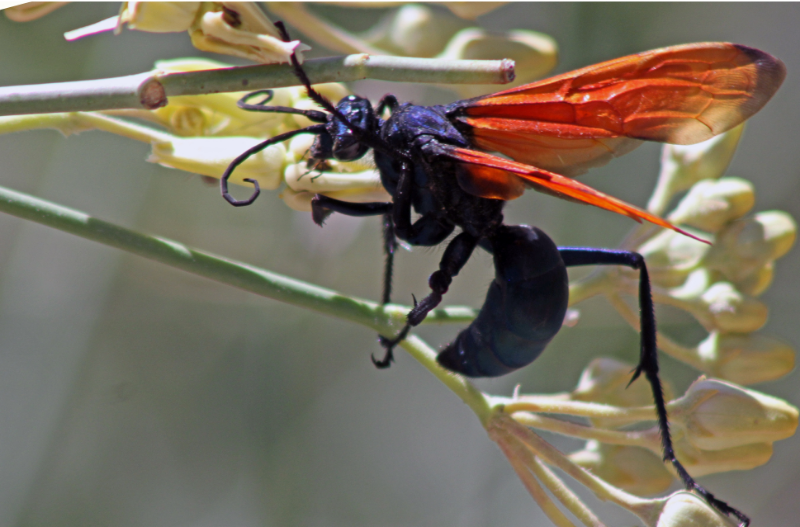
This wanton wasp doesn’t just sting the tarantula and feast on its insides, that would be far too painless a death for the tarantula. Akin to the xenomorphs of the Alien movies, the tarantula hawk has ulterior motives for attacking its prey: procreation. Once a tarantula hawk stings a tarantula, a toxin is secreted that paralyzes the tarantula within seconds.
The tarantula hawk then drags its paralyzed prey back to its burrow and lays an egg in the spider's abdomen. The tarantula hawk purposefully lays its egg away from any vital organs to keep the tarantula alive for as long as possible. The larva hatch and devour the insides of the tarantula while it’s still alive! This process can take weeks until the larvae are ready to enter the world, emerging from the empty hull of what was once a tarantula.
And that’s the end of our movie, “terrorizing the tarantula.” Tarantulas everywhere flee as the credits roll. So, although your arachnophobia exacerbated by Hollywood films may make tarantulas the thing of nightmares, there’s a creature out there even scarier and potentially dangerous. Luckily, both species tend to keep to themselves, and rarely are extermination services needed. However, the Bug-A-Meister offers the best wasp and spider extermination services in Central Texas, so contact us if the monsters of this film come too close for comfort!